I miss games that feel slightly dangerous to recommend.
Not dangerous as in edgy marketing, fake controversy, or another trailer where someone whispers over a sad piano cover. I mean the kind of game you push on a friend with a warning label attached: "This is clumsy, it wastes your time in places, and one system is absolutely going to annoy you. Play it anyway."
That sounds like a bad sales pitch. It is also how half the cult games people still argue about earned their shelf space in our brains.
Rough edges used to be part of the fingerprint
Plenty of older favorites survive because they had an identity strong enough to carry the awkward bits. The Elder Scrolls III: Morrowind is the obvious example, because of course it is. Its combat can feel like swinging a broom through fog. Its journal expects you to read instead of following a glowing breadcrumb trail. Its NPCs often stand around like museum exhibits that learned gossip.
And yet Vvardenfell still feels stranger and more specific than many cleaner open worlds that arrived later. The ash storms, the bug-shell towns, the mushroom towers, the legalistic weirdness of its politics: all of it says, "No, you adapt to us." That friction is not always elegant, but it makes the world feel like a place instead of a content tray.
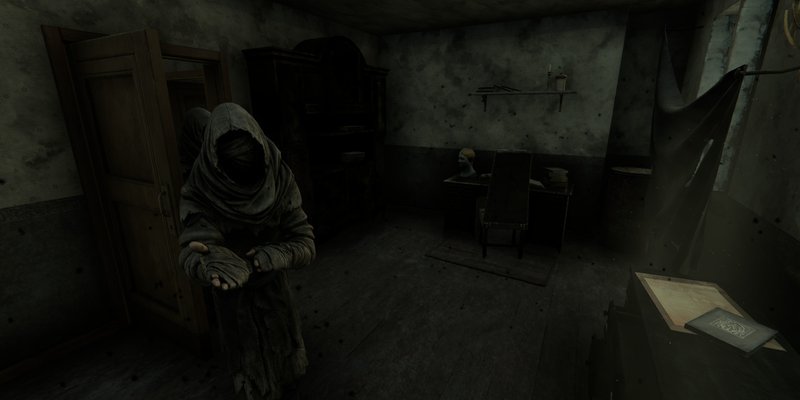
Pathologic 2 works in a similar, meaner register. It is not designed to be a frictionless horror tourism package. It is hungry, hostile, and exhausting. You are meant to feel like you are failing even when you are technically making progress. Some players bounce off that immediately, which is fair. Still, the discomfort is the point. If you sand that game down until every need is convenient and every route is clear, you do not improve it. You remove the teeth.
Polish is useful. Sterility is not.
There is a boring version of this argument that says bugs are good, bad controls are character, and any criticism of jank means you are a coward who hates art. No. Absolutely not. Broken saves are not soul. Crashes are not authorial intent. A camera that loses the boss during the boss fight is not avant-garde, it is a camera that lost the boss during the boss fight.
Polish matters because players have finite patience. A game can ask me to learn its language, but it should not make me wrestle the door handle before I am allowed inside. Basic readability, performance, input response, checkpointing, accessibility options: these are not luxury features. They are the floor.
The problem starts when polish stops meaning "make the idea clearer" and starts meaning "make the idea safer." Those are very different jobs. One helps the game speak. The other teaches it to avoid saying anything odd.
The algorithmic middle is comfortable, and that is the trap
Modern games, especially expensive ones, are under pressure to be readable in five seconds. The trailer has to explain the loop. The UI has to pre-chew the objective. The opening hour has to prove the budget before anyone refunds, unsubscribes, or gets distracted by a different live service screaming for attention.
None of that pressure is imaginary. Games cost money. Teams need players. Players are tired. Nobody wants to spend sixty dollars on a grand experiment that faceplants at the menu screen.
But when every system has to be smooth, every genre label has to be obvious, and every risky idea has to be justified by a familiar progression bar, games start to blur together. You get solid products. You get competent evenings. You get a lot of games that are hard to hate and weirdly easy to forget.
That is where I think the old cult-game energy still matters. Not because the past was magically braver. It was not. There was plenty of beige sludge then too. But smaller teams, stranger constraints, and less standardized player onboarding sometimes produced games that walked into the room wearing the wrong shoes and somehow made the outfit work.
Players can handle a little mess
The funny thing is that players already tolerate friction when it feels honest. Survival games make hunger annoying on purpose. Fighting games ask you to lose for weeks before your hands learn the sentence. Soulslikes built an empire on the idea that inconvenience can become texture if the rules are consistent enough.
So maybe the question is not whether players hate rough edges. Maybe we hate rough edges that feel accidental, disrespectful, or lazy. We can tell the difference between a game making a deliberate demand and a game wasting our Saturday because nobody fixed the inventory screen.
I want more projects that understand that difference. More games with an ugly little theory of fun. More worlds that do not immediately behave. More systems that make me mutter at the monitor, then keep thinking about them at lunch the next day.
Give me polish where it protects the player from nonsense. Give me mess where the mess has meaning. The safest game in the world can still be good, but it rarely becomes the one people are still defending, misremembering, and reinstalling ten years later.