I do not open a game launcher because I love launchers. I open it because there is a game on the other side, and the best possible compliment I can give any platform is this: I stopped thinking about it.
That sounds almost rude, but it is the secret sauce behind Steam's grip on PC gaming. Steam is not perfect. The store can feel like a casino carpet of capsules, discounts, and algorithmic nudges. Discovery is still a small war. Yet for a lot of players, Steam has become boring in the exact way infrastructure should be boring. It updates games. It remembers saves. It handles controllers. It lets a Steam Deck suspend a game like a console without pretending the PC underneath has vanished. Most days, it simply gets out of the way.
Friction is the real platform tax
PC players are not allergic to choice. We install mods from one place, drivers from another, overlays from somewhere else, and then spend thirty minutes arguing about frame pacing like it is a municipal zoning dispute. A second launcher is not automatically a moral crisis.
The problem starts when the launcher becomes a toll booth. Another login. Another password reset. Another two factor prompt on a box you already trusted. Another pop up asking you to accept new terms before you can play the single-player game you bought three years ago. None of that feels like competition. It feels like being stopped in the hallway by a clipboard.
Steam's advantage is not only library size. It is accumulated absence. The absence of surprise account chores. The absence of wondering which client owns the install. The absence of needing to remember whether cloud saves are working this week. That kind of trust is dull, and dull is incredibly valuable when all you wanted was forty minutes with a game after dinner.
Steam Deck made the point louder
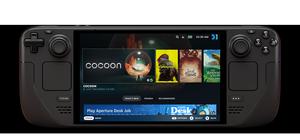
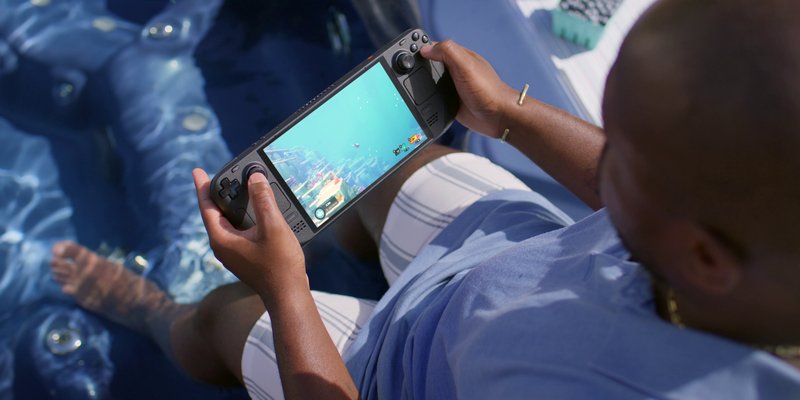
The Steam Deck is where this became obvious to people who never cared about launcher politics. Valve took a Linux handheld, layered SteamOS over it, and made the scary part mostly disappear. Proton, the compatibility layer that lets many Windows games run on Linux, is doing absurd work underneath. Most players do not need to know that. They press play.
As someone who likes tinkering, I love that the Deck still lets you drop into desktop mode, install other stores, poke around, and break things in the proud PC tradition. But the magic is that you do not have to. The platform respects both moods: the evening when you want to tune settings, and the tired Sunday when you just want Dave the Diver to resume from sleep without a ritual sacrifice.
That is what weaker launchers often miss. They copy the visible furniture: the library grid, the store tabs, the friend list, the notification bell. They forget the part that matters. A platform earns loyalty in the seconds it does not steal.
Competition still matters
There is a fair counterpoint here, and it is not small. Steam should not be the only gravity well in PC gaming. A healthier market needs alternatives. Developers need leverage. Players benefit when stores fight on revenue share, refunds, regional pricing, accessibility, curation, and preservation. If every road leads to one storefront forever, PC gaming gets less weird and less resilient.
Epic has given away mountains of games and pushed hard on developer economics. GOG's DRM-free pitch still matters, especially for preservation and offline access. Itch.io remains one of the best places to find strange, personal, tiny games that would get buried under bigger storefront machinery. Those are real contributions, not footnotes.
But competition is only useful to players when it competes on the play experience. If the pitch is "use our launcher because this game is locked here," that is not a better platform. That is a locked door with marketing copy taped to it. Exclusives may buy attention, but they rarely buy affection.
The launcher should know its place
The funny thing about PC gaming is that players will tolerate a ridiculous amount of complexity if it feels self-directed. We will tweak config files, compare shader compilation behavior, and spend a whole evening making a controller profile feel right. What we resent is mandatory nonsense. The difference is consent.
A good launcher should make ownership clearer, patches less annoying, saves safer, controllers easier, refunds simpler, and multiplayer invitations less like paperwork. It should help games travel across desktop, laptop, handheld, and living room without making each device feel like a separate legal negotiation.
Steam gets too much credit sometimes, and Valve deserves pressure like everyone else. The storefront needs better moderation. The review system can be messy. The platform's dominance should make players cautious, not sleepy. Still, the reason people keep returning is not just habit. It is relief.
The best gaming platform feature is not a new social feed, a seasonal badge, or a launcher redesign with three more animated panels. It is the quiet confidence that when you press play, the platform will remember why it exists.