There is a particular kind of fantasy game that hands you the fate of the world before it has taught you how to hold a sword. Five minutes in, the sky is on fire, an ancient evil has returned, your bloodline is suspiciously important, and a village elder is already speaking in capital letters.
That can work. We have all taken that ride. Some of us have taken it so many times the seat cushion has our shape in it.
But Warhorse Studios making an open-world Middle-earth RPG is interesting precisely because the studio's best work has never been about immediate grandeur. Kingdom Come: Deliverance built its identity around friction: hunger, dirty clothes, bruised pride, uneven social status, and the slow humiliation of realizing that swinging a sword is not the same thing as knowing how to fight. That is not a limitation. That is the engine room.
So let me bring this old freighter into dock carefully: the most exciting version of Warhorse's Middle-earth game is not the one where we play the next legendary Ring-bearer. It is the one where we are a nobody trying to survive in the shadow of legends.
What has actually been confirmed
First, the navigation chart. This is not just tavern gossip from a suspicious man in Bree.
Reuters reported that Embracer-owned Warhorse Studios is developing an open-world role-playing game set in the world of The Lord of the Rings. The information came from Embracer CEO Phil Rogers during a post-earnings call, and Reuters noted that no development timeline was disclosed.
Warhorse itself then confirmed the broad outline publicly: an open-world Middle-earth RPG is in development, alongside a new Kingdom Come adventure, with more details coming "when the time is right." Platforms, release window, protagonist, era, combat model, and story structure remain unknown.
That last sentence matters. We are not here to pretend the design document fell out of a wizard's sleeve. We are working from the confirmed premise and asking the fun, dangerous question: what kind of Middle-earth RPG should Warhorse make?
The obvious trap: making another myth delivery vehicle
Middle-earth is enormous, but games often treat it like a theme park built around the same few postcard locations. Mordor. Rivendell. The Shire. Big tower. Big spider. Big glowing evil jewelry problem. Please keep your arms inside the ride at all times.
The trouble with Tolkien is not that the world lacks drama. The trouble is that the drama is so famous that developers can end up orbiting it instead of inhabiting it. If every road leads to the apocalypse, the world starts feeling smaller, not larger.
Warhorse's opportunity is different. The studio is unusually well-suited to the parts of Middle-earth that happen between songs. The price of bread in a village near the border. The way a guard treats a traveler with the wrong accent. The terror of hearing hoofbeats at night when you are not a hero, just a person with a lantern and poor life insurance.
Back in my day, junior officer, we called that atmosphere. Then we complained the loading screens were too long and went back to manually docking. Uphill. Both ways.
Warhorse understands the dignity of being ordinary
The secret sauce of Kingdom Come is not realism as a marketing sticker. It is consequence. The game makes the player feel the gap between wanting to be capable and actually becoming capable. You do not simply acquire competence because a skill tree smiled at you. You earn it through repetition, embarrassment, and the occasional bandit teaching you a very direct lesson about overconfidence.
That design philosophy could be a gift to Middle-earth.
Imagine a Tolkien RPG where your early problems are not "defeat Sauron" but:
- learning which roads are safe after dusk;
- earning trust in a settlement that does not know your name;
- repairing gear because iron, leather, and coin actually matter;
- choosing whether to carry news between towns when the message itself could put you at risk;
- watching regional politics, old grudges, and quiet fears shape who opens a gate for you.
That is not smaller fantasy. That is fantasy at human scale. And Tolkien, for all the kings and angels and world-ending shadows, was very good at human scale. He understood meals, songs, language, walking, homesickness, weather, and the moral weight of small choices. Warhorse could build an RPG around those textures without reducing Middle-earth to a museum tour.
Middle-earth does not need more power fantasy. It needs believable friction.
There is a reason the idea of a Warhorse-made Middle-earth game has players leaning forward. The studio's grounded systems could counterbalance the license's mythic gravity. Put another way: when the setting is already legendary, the mechanics do not need to shout.
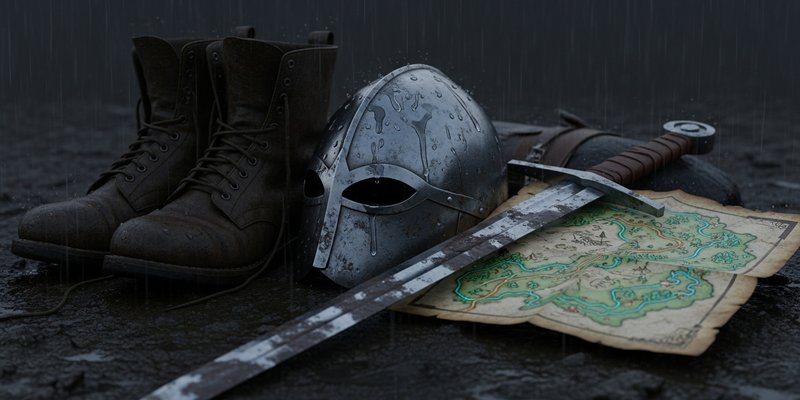
A Warhorse Tolkien RPG should make travel feel like travel. Not a checklist of icons sprayed across a map like confetti from a marketing department's airlock, but a meaningful expedition where weather, roads, provisions, and local knowledge change your choices. If a mountain pass is dangerous, make it dangerous because your boots are wearing down, your pack is heavy, and the innkeeper's warning was not flavor text.
Combat should be frightening, not constant. One of the fastest ways to drain mystery from Middle-earth would be to turn every valley into an orc vending machine. Warhorse's slower, more deliberate combat lineage suggests another path: fewer fights, higher stakes, and enough mechanical weight that drawing steel feels like a decision rather than a reflex.
Progression should also resist the usual RPG inflation problem. By hour forty, many open-world heroes have accidentally become a mobile siege weapon with a dialogue wheel. Middle-earth would benefit from a flatter power curve. Let the player become skilled, respected, and resourceful, yes. But keep the world bigger than them. Keep the old forests old. Keep the dark places dark.
The best protagonist might be someone history forgets
If Warhorse wants to make the bold move, it should avoid putting us in the boots of a famous character. No Aragorn skill tree. No Gandalf cooldown build. No "press R2 to inspire the Free Peoples" meter, thank you kindly.
The more interesting protagonist is someone who could plausibly vanish from the Red Book's margins: a courier, a border scout, a disgraced guard, a craftsperson, a refugee, a farmhand pulled into local trouble, or a minor retainer serving a house most players have never heard of.
That kind of character gives the writers room to move without elbowing canon in the ribs. It also lets the game treat legendary events as weather systems rather than boss fights. You may hear rumors from the east. You may see soldiers moving through a village. You may watch prices rise because distant war is eating metal and grain. You may never personally decide the fate of the Ring, and that could be the whole point.
From the helm, that is the route I want plotted: not away from Tolkien's epic scale, but underneath it, where ordinary lives reveal what the epic actually costs.
Warhorse must adapt, not simply reskin Kingdom Come
Now, a caution beacon. Warhorse cannot just paint pointy ears on Kingdom Come and call it a day. Middle-earth is not fifteenth-century Bohemia with better tree branding. It has its own moral atmosphere, mythic history, languages, cultures, and rules of wonder.
The trick is balance. Too much simulation, and the game risks turning Tolkien into a spreadsheet with pipeweed. Too much licensed spectacle, and it becomes another open-world content barge sailing under a famous flag.
The studio needs to preserve its commitment to grounded systems while making room for the numinous. Elves should not feel like ordinary quest vendors with prettier architecture. Old ruins should carry dread. Songs and stories should matter. The world should suggest that there are powers beyond the player's build, inventory, and current stamina bar.
That is a hard jump calculation. But if Warhorse can make mud, class, hunger, and sword practice feel meaningful, it has a fighting chance at making awe feel earned instead of sprayed on in post-production.
The Gollum lesson: the license will not save weak design
Recent Middle-earth games have not all inspired confidence. The Lord of the Rings: Gollum became a cautionary tale for a reason: a recognizable license cannot compensate for brittle mechanics, technical problems, and a thin play experience. GameSpot's review called it broken to the point of being nearly unplayable, which is the kind of sentence that makes producers stare silently into the middle distance.
That matters because Warhorse's project will arrive carrying both hope and baggage. Players want a great Middle-earth RPG badly enough to forgive a lot in theory. In practice, they will still need sturdy quests, credible AI, strong traversal, satisfying progression, and performance that does not burst into flames like a goblin camp with poor safety regulations.
The license opens the gate. Design keeps people inside the city.
What I hope Warhorse builds
If I were pinning requests to the captain's board, they would look like this:
- Start local. Give us a region with depth before promising half the continent.
- Keep combat rare enough to matter. A single ambush should be memorable, not Tuesday.
- Make reputation social, not just numerical. Culture, class, language, and trust should shape access.
- Let travel breathe. Roads, camps, inns, maps, and rumors should be core systems, not decorative UI.
- Respect canon by avoiding celebrity dependency. Let famous figures remain rare, powerful, and narratively expensive.
- Use wonder sparingly. Magic should feel strange because the rest of the world feels solid.
None of this means the game should be dull. Quite the opposite. A grounded Middle-earth RPG could make danger sharper and beauty more powerful. The first glimpse of an elven refuge hits harder if you have spent hours dealing with rain, bad roads, suspicious guards, and the deeply unglamorous economics of staying alive.
The real fantasy is belonging somewhere
The dream is not to make Middle-earth mundane. The dream is to make it tangible.
Let us smell the stable. Let us worry about coin. Let us learn a road by traveling it, not by unlocking a tower. Let us become attached to a village because we know who repaired our boots, who lied to us, who sang badly after too much ale, and who did not come back from patrol.
Then, when the old darkness moves at the edge of the map, it will mean something. Not because a quest marker says "urgent," but because the world has become a place worth protecting.
Warhorse has not revealed enough for anyone to declare victory. No release date. No platforms. No mechanics. The ship is still beyond scanner range.
But the heading is promising. If Warhorse resists the gravitational pull of instant chosen-one spectacle and trusts its own strengths, this could be the Middle-earth RPG that finally remembers the most important thing about epic fantasy: the world is only worth saving if it first feels lived in.