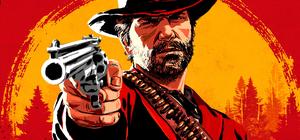
Almost everyone has a Rockstar story that has nothing to do with the mission they were supposed to be doing.
Maybe you stole the wrong car in Grand Theft Auto V, clipped a police cruiser, and spent the next 25 minutes turning Los Santos into a smoking insurance claim. Maybe you rode across Red Dead Redemption 2 with a proper plan, saw something weird in the trees, and forgot the plan existed. That is the old Rockstar spell. The plot gives you somewhere to go. The world keeps asking why you are in such a hurry.
Dan Houser, Rockstar co-founder and former lead writer on several of the studio's biggest games, reportedly talked about that tension during a Tribeca Festival discussion, according to a GRYOnline write-up. His point, as reported, was not that story does not matter. He would like players to finish the story. Of course he would. He helped write the things. But if someone enjoys a Rockstar game by wandering, crashing, experimenting, or making a mess for 100 hours and never rolling credits, he does not see that as failure.
That sounds obvious until you look at how games are usually sold. Trailers sell characters, stakes, dialogue, cinematic cuts, and the big emotional promise. Players often remember the unscripted stupidity.
The mission is only half the memory
GRYOnline summarizes Houser's argument as a defense of systems, interaction, and player freedom. Since GTA 3, Rockstar has tried to get more players through the main story, but the open world has always been the thing that lets players make the game their own. A rooftop jump, a stolen car, a random pedestrian reacting at the worst possible second: those moments are not authored like a campaign scene, but they are usually the stories players retell.
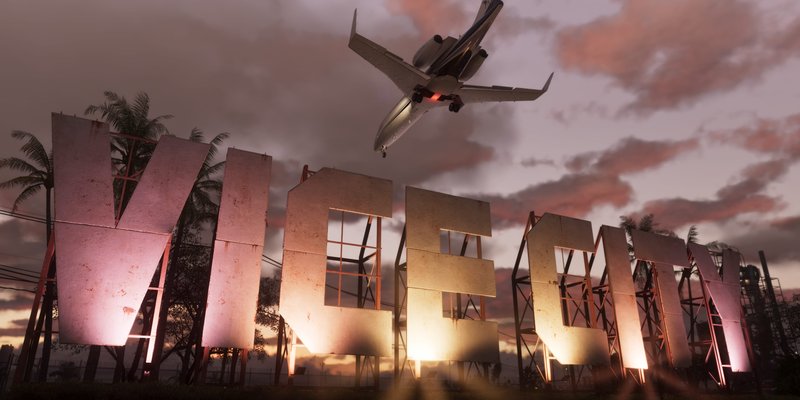
That is why the comment lands differently with Grand Theft Auto VI waiting in the distance. Rockstar's official site currently lists GTA VI for November 19, 2026 on PlayStation 5 and Xbox Series X|S, with Jason, Lucia, Vice City, and the wider state of Leonida at the center of the setup. The story pitch matters. People will dissect every line of dialogue and every second of trailer footage because that is what GTA anticipation does to the human brain. It is not dignified, but it is traditional.
Still, the campaign is probably not what decides whether GTA VI dominates for years. The longer test is whether Leonida feels like a place players can inhabit incorrectly. Can you waste an evening without feeling like you wasted the game? Can a bad decision snowball into something funny, annoying, or strangely memorable? Can the world push back in ways that feel reactive rather than decorative?
Both kinds of players are right
The useful part of Houser's reported view is that it refuses to scold either side. If you play Rockstar games for the campaign, you are not doing homework. The writing, performances, mission structure, and character arcs are a real part of the appeal. Red Dead Redemption 2 would not hit the same way if Arthur Morgan were just a cowboy-shaped cursor moving between errands.
But the chaos tourist is not playing wrong either. The person who treats GTA V like a machine for police chases, stunt jumps, outfit crimes, and bad choices is still engaging with the design. In some ways, that player is stress-testing the part Rockstar has spent decades building: the illusion that the world can absorb your nonsense and answer back.
This is where a lot of open-world games quietly struggle. They can be huge without being flexible. They can be detailed without being playful. A map full of icons is not the same as a world that lets a player create a story by accident. Rockstar's best sandboxes work because the boring verbs are strong. Driving, walking, aiming, bumping into strangers, fleeing trouble, hearing music bleed out of a car radio. If those tiny interactions feel right, players forgive a lot.
What GTA 6 needs to prove
The scary thing for GTA VI is that expectations are now absurd. Players do not just want a bigger Vice City. They want the old freedom to survive modern production values, streaming culture, online speculation, and the weight of a decade-plus wait. They want a story worth finishing and a sandbox worth derailing.
Houser is no longer at Rockstar, so his comments should not be treated as a secret design memo for GTA VI. That distinction matters. He is describing the philosophy that made Rockstar's worlds stick, not confirming how the next game works. But it is still a useful lens for watching the rollout.
The next trailer will probably send everyone into forensic mode again. Fine. Freeze-frame the billboards, argue about hair physics, count the alligators. Just do not lose sight of the quieter question: when the mission marker is sitting there patiently, will Leonida give players enough good reasons to ignore it?
If it does, Houser's old point will hold. Finishing the story will be one way to play. Causing a small civic disaster on the way there will be another.