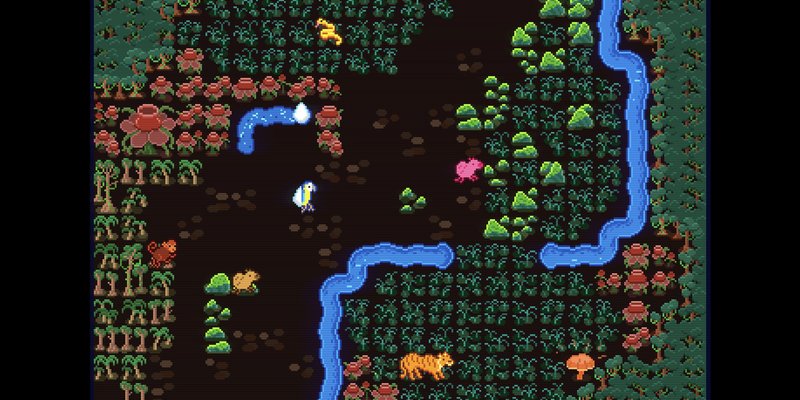
I am suspicious of puzzle games that sound clever only after three paragraphs of explanation. Mimic Meadows does not have that problem. Its pitch is clean enough to fit on a cartridge sticker: copy how an animal moves, turn into that animal, and use the new rules to reach places your normal little creature body cannot.
The demo is live on Steam now, which is the correct place for a puzzle game like this to prove itself. Store descriptions are cheap. A good puzzle hook has to survive the first few minutes with your hands on the keyboard or controller, when the cute premise either becomes a real thought process or collapses into novelty sludge.
Based on the demo writeup from Rock Paper Shotgun and the official Steam page, Mimic Meadows is very much trying to be the former. It is an upcoming indie puzzle game from sourencho, with no release date yet beyond Steam's "Coming soon" label. The important bit for players is simpler: there is a demo, it is built around animal mimicry, and the game seems interested in squeezing actual consequences out of that one strange idea.
The hook is easy to understand
Mimic Meadows moves on a grid, one square at a time, so the first comparison that jumps to mind is Baba Is You. That does not mean it is chasing the same trick. Baba bends language. Mimic Meadows bends bodies.
RPS describes an early example involving a mountain goat. Your default form can walk on dirt. Copy the goat's movement correctly and you become goat-like enough to cross rocks instead, but you lose the dirt-walking comfort you started with. That trade matters. The transformation is not a costume swap or a free upgrade. It changes the tiles that make sense, which means every new animal is also a new set of restrictions.
That is where the hook gets interesting. The game is not asking, "Which animal has the obvious power for this obstacle?" It is asking how far you can route yourself through a board once your available ground changes. The answer might involve becoming the goat, giving up dirt, reaching a mushroom, then realizing the level has been quietly teaching you a movement grammar rather than handing you a key.

The demo seems to escalate the right way
A lot of single-mechanic puzzle games die when they run out of first ideas. Mimic Meadows appears to understand the danger. The Steam page says the full game will have five biomes, unique animals, dozens of hand-crafted puzzles, optional challenge rooms, hidden secrets, and animal behaviors that go beyond movement, including eating, mating, and other creature-specific interactions.
That list could sound like brochure padding if the demo did not already show some escalation. RPS notes levels where you move a rock to alter how an animal moves, creating the pattern you need to copy inside a tight space. Later puzzles can effectively fuse animal logic, letting you combine terrain permissions after copying the right movement. That is the good kind of puzzle escalation: same basic verb, messier consequences.
For players, this is the difference between a cute Steam Next Fest curiosity and something worth keeping on the wishlist. If the game keeps introducing animals as rule changes rather than mascots, Mimic Meadows could land in that satisfying corner where each solution makes you feel mildly brilliant and a little ridiculous. Space Daddy approves. The goats are probably lying, but the puzzle language checks out.
There is one caveat
The mimicry has to be precise. According to RPS, you do not need to stand directly beside an animal to copy it, but you do need to move in the same direction at the same time. That can feel finicky when space is tight.
That caveat is worth keeping in your head before you download the demo. Timing-based alignment can be delicious when it clicks and maddening when the game reads your intent as a tiny mistake. The whole design depends on that input layer feeling fair. If it does, the mechanic can support a lot of weird puzzle setups. If it does not, the game risks turning its smartest idea into a tiny traffic violation simulator.
The upside is that demos are made for exactly this question. You can test whether the rhythm feels natural before attaching your precious wishlist dopamine to it. Steam lists full controller support, and the page includes Windows, macOS, and SteamOS/Linux requirements, though Steam Deck compatibility is still marked unknown. Translation: try it on your preferred setup, but do not assume Deck status has been blessed by the Valve goblins yet.
Why puzzle fans should bother
Mimic Meadows has the thing indie puzzle games need most: a mechanic you can explain quickly, then complicate for hours. It also has enough charm in its pixel-art meadows to make experimentation feel playful instead of sterile. That matters. When a game wants you to try weird routes and copy animal movement patterns, it helps if the board looks like a place you want to poke at rather than a spreadsheet wearing grass.
I would not crown it from a demo and a storefront. That would be silly, and the Demo Gods punish that kind of nonsense almost as hard as Friday deployments. But if you like grid puzzles, animal weirdness, or games that ask "what happens if I do this dumb little thing?" and then reward you for asking, Mimic Meadows belongs on your radar.
The next move is easy: play the demo, see whether the mimic timing agrees with your brain, and wishlist it if the meadow starts whispering puzzle solutions at you. No release date yet. No big victory speech. Just a small game with a clean hook, which is sometimes the most dangerous kind.