End of Eden has chosen a dangerous neighborhood to move into.
Not because open-world RPGs are rare. We are buried in open worlds. You can barely open a store page without being handed a map covered in icons, crafting materials, and three different currencies wearing a trench coat. The dangerous part is more specific: End of Eden is openly walking into Gothic territory.
That means three things. A hostile world. Faction-driven progression. And the very old-school belief that the player should not be treated like the chosen one five minutes after character creation.
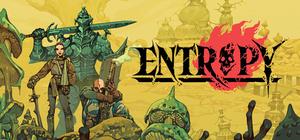
On paper, Laughing Fox Games’ upcoming RPG sounds laser-targeted at the people who still talk about the first two Gothic games like they were survival manuals. Steam describes End of Eden as a “love letter to the first two Gothic games,” with a 2027 release window, a cursed island setting, three guilds, day-and-night routines for NPCs and creatures, dangerous early combat, and quests with multiple outcomes.
Meanwhile, Alkimia Interactive’s Gothic Remake is due June 5, 2026 for PC, PlayStation 5, and Xbox Series X/S, backed by THQ Nordic and armed with the most obvious weapon in the room: the actual Gothic name.
So yes, the spicy framing writes itself: can a Polish indie RPG out-Gothic Gothic Remake?
The less clicky answer is better: it depends on whether End of Eden understands that Gothic was never just about swords, mud, and NPCs walking to bed at night. It was about pressure.
The Real Gothic Formula Is Not Nostalgia. It Is Friction.
Let’s decode the design problem here.
A lot of games borrow the surface language of classic RPGs. They add factions. They add campfires. They add some grumpy guards who call you weak. Cute. Very vintage. Put it on a tote bag.
But Gothic worked because its systems pushed back. The world did not orbit you. Early enemies were not polite XP balloons. Joining a faction changed what you could become. NPC routines made settlements feel occupied rather than staged. Progression was satisfying because the game first made you feel small.
That is the hard part to replicate. Not the colony. Not the accents. Not the swamp. The friction.
End of Eden is promising several ingredients that point in the right direction. Its Steam page highlights NPCs and creatures following day-and-night routines, a world that continues without waiting for the player, and a progression arc from “nobody” to credible threat. It also lists melee, ranged, magic, crafting, resource gathering, and unique perks as part of character growth.
Those are not minor bullet points. In this subgenre, they are the engine bay.
If NPC schedules influence quest timing, stealth, trade, patrols, and faction access, then the world starts to feel systemic. If creatures move through spaces on believable loops, wilderness becomes more than a monster closet. If rewards for different quest outcomes are intentionally comparable, then decisions can become roleplay choices instead of spreadsheet obedience.
That last part matters. When every “choice” has one obviously optimal reward, the player is not making a moral decision. They are doing math with dialogue attached.
Gothic Remake Has the Safer Route — and the Bigger Trap
Alkimia Interactive has a very different challenge. Gothic Remake does not need to explain why people should care about Gothic-style RPG design. It owns the sign above the door.
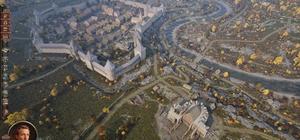
According to THQ Nordic’s overview, the remake is rebuilding the 2001 classic with current-gen technology while preserving unrestricted exploration, satisfying progression, a hand-crafted organic world, daily routines for NPCs and wildlife, expanded questlines, additional routines and reactions, new traversal abilities, and modernized combat.
That is a strong pitch. It is also a tightrope over a pit full of angry old RPG fans.
The remake has production advantages End of Eden cannot realistically match: brand recognition, a publisher pipeline, console certification, modern art resources, marketing muscle, and the ability to sell itself as a return rather than an introduction. For many players, “faithful remake of Gothic” is already enough to click wishlist.
But remakes have a special curse. They are expected to modernize and preserve at the same time. Make combat too clunky and people call it outdated. Make combat too smooth and veterans accuse it of losing the original’s deliberate danger. Add convenience and you risk sanding down the very discomfort people came back for.
That is where End of Eden has a narrow but real opening.
An indie RPG does not need to look more expensive than Gothic Remake. It needs to feel less compromised.
Indie Agility Can Win, But Only With Brutal Scope Discipline
Here is the boring production truth, which is usually where the real design story lives: simulation is expensive.
Not always in money. Sometimes in QA time. Sometimes in edge cases. Sometimes in the developer staring at an NPC schedule bug at 2:14 a.m. because a blacksmith went to sleep holding a quest-critical hammer and now the entire economy has entered its flop era.
A living world sounds romantic until every routine can break every quest.
That is why End of Eden being smaller could be an advantage if the team treats scope like a weapon. A compact island with fewer, denser settlements can support more meaningful simulation than a massive map where every village is mostly decoration. Three sharply defined guilds can matter more than seven factions that mostly sell different hats. A limited bestiary with strong behaviors can feel more alive than dozens of enemies with identical aggro logic.
Think of it like building an immersive clock. A AAA project can afford a beautiful clock face. The indie project has to make sure the gears actually turn.
If End of Eden leans into that, it can become more than a tribute act. It can become a useful reminder that RPG depth is not measured by square kilometers. It is measured by how many systems notice what the player did.
The Combat Question: Punishing Is Not the Same as Deep
There is one area where both games need to be careful: combat.
End of Eden is promising dynamic combat built around reflexes, enemy knowledge, weapons, spells, distance control, and punishing mistakes. That is exactly the right vocabulary. It is also the vocabulary every ambitious action RPG uses right before making wolves stun-lock the player into a hedge.
The difference between “hard but fair” and “please uninstall my skeleton” is readability.
Classic RPG difficulty works when players can understand why they lost. Was the enemy too strong? Did they misread the animation? Did they enter the wrong area too early? Did their build lack tools? Fine. That is learning. But if the combat feels floaty, enemy tells are muddy, or hitboxes act like haunted furniture, difficulty turns into noise.
Gothic Remake has its own version of that test. Modernized combat must be approachable without becoming generic. The original’s appeal was not that every swing felt elegant. It was that growth changed your relationship with the world. A scavenger that once terrified you eventually became a speed bump. That transformation is the reward loop.
Both games need to preserve that arc: weak, cautious, competent, dangerous. Skip the first step and the power fantasy has no spine.
Faction Design Is Where the Fight Gets Interesting
The strongest overlap between the two projects is faction identity.
Gothic Remake is built around the Colony’s faction structure, with choices affecting abilities and playstyle. End of Eden promises three island guilds, each with its own values, rules, talents, and story/build implications.
This is where an RPG can either become memorable or politely evaporate.
Good factions are not just skill trees with banners. They are social contracts. Joining one should open doors and close others. It should affect who trusts you, who exploits you, what gear feels natural, what quests become available, and what compromises you are expected to swallow.
If End of Eden wants to challenge the remake, this is the arena. It needs guilds that feel materially different, not just cosmetically separated. It needs consequences that are inconvenient enough to be felt. It needs players arguing online about which faction is morally defensible, mechanically strongest, or secretly full of absolute clowns.
That kind of argument is free marketing. More importantly, it means the systems are biting.
So, Can End of Eden Really Compete?
Yes, but not by “beating” Gothic Remake at its own production game.
Gothic Remake is the big, official return: current-gen presentation, known setting, console reach, and a fixed 2026 launch. It will likely be judged on fidelity, modernization, atmosphere, and whether it can make a classic feel playable in 2026 without putting bubble wrap around it.
End of Eden is the philosophical challenger. It has a 2027 window, no legacy license to protect, and the freedom to build a Gothic-like RPG from first principles. That freedom is valuable. It is also dangerous, because every promised system has to survive contact with actual players.
The winning path is not louder marketing. It is specificity.
- Make the island dense, not huge. A smaller world with real routines beats a giant one full of cardboard villages.
- Make guild choices restrictive. If players can have everything, factions become flavor text.
- Make difficulty legible. Punishment works when players can read the lesson.
- Make quests react beyond dialogue. Consequences should alter access, schedules, relationships, or resources.
- Make progression visible. The player should feel the climb from unwanted nobody to someone the island has to account for.
If Laughing Fox Games lands those points, End of Eden does not need to kill Gothic Remake. That framing is fun, but it is also a little silly. Games are not Highlanders. There can be more than one muddy RPG with faction drama and suspiciously aggressive wildlife.
The more interesting outcome is that both games succeed for different reasons. Gothic Remake could reintroduce a classic to a wider audience. End of Eden could prove that the classic formula still has room to mutate, especially when built by a team willing to prioritize simulation over spectacle.
That is the real test. Not who owns the name. Who makes the world push back?