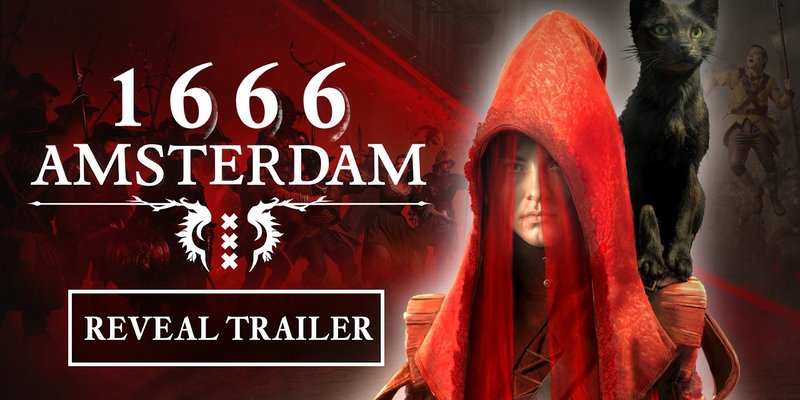
1666: Amsterdam does not get to arrive like a normal new game. Too much baggage followed it here.
Panache Digital Games has re-revealed the dark third-person story-led action-adventure at Summer Game Fest, with Patrice Désilets back in the creative director chair and a free prologue already live on Steam and the Epic Games Store. The full game is planned for PC Early Access in 2026, with console versions planned later. That is the clean news version. The messier version is more interesting: this is a project that started life at THQ Montreal, got dragged through THQ's collapse, passed through Ubisoft, vanished for years, and eventually returned to Désilets after he won back the rights.
So yes, the trailer matters. The premise matters. But the 30-minute prologue matters more. A game with this much mythology around its creation needs players to touch it, not just admire the comeback story from a safe distance.
A strange pitch, in the right way
Panache is pitching 1666: Amsterdam as a supernatural historical mystery about power, debt, and old forces living inside the city. The announcement introduces Noa Brooklyn, born as the Collector and raised by the Zaindaris for a role she did not choose. It also mentions the Originals, entities that have lived among people for centuries, and Aaron, a character pulled from 1999 who now sees the world through the eyes of a cat.
That is a lot. Maybe too much, if it stays as lore soup. The good news is that the prologue sounds built to give players a handle on it. Panache says it introduces the world, the characters, the core mystery, and a companion choice tied to Noa's path. It also jumps across 1666, 1999, and the present day.
The risk is obvious: a setup this dense can either feel deliciously occult or like someone emptied a wiki into the opening hour. The demo is where we find out which one Panache is making.
The history raises the stakes
Désilets' name will pull attention because of Assassin's Creed, and that comparison is not going away. Amsterdam, historical intrigue, movement through a dense city, secret powers behind public events: players are going to read that through an Assassin's Creed lens whether Panache wants them to or not.
But 1666: Amsterdam cannot survive by feeling like a lost Ubisoft prototype with fresher lighting. Panache already proved with Ancestors: The Humankind Odyssey that it is willing to build strange systems and ask players to meet them halfway. That ambition is part of the appeal. It is also why the new game has to explain itself through play quickly. Mystery is great. Confusion is cheaper.
The studio's own quote is telling. Désilets says the team has spent six years focusing on the game itself: no fake footage, no vertical slices, just a playable experience changing build by build. That line only works if the prologue feels honest. Rough edges are forgivable in an Early Access path. Smoke and mirrors are not.
What players should test in the prologue
If you try the free prologue, do not treat it like a verdict on the full game. Treat it like a smell test.
First, watch how quickly the story gives you something concrete to care about. Names like Collector, Originals, and Zaindaris are only useful if the game turns them into stakes, choices, and people. Second, pay attention to movement and interaction. A historical city can look beautiful in a trailer and still feel dead under the controls. Third, look at the companion choice. If that choice changes dialogue, perspective, or how Noa reads the world, it could become the hook. If it is just setup flavor, that is worth knowing early.
The cat angle is also the kind of detail that will either become weirdly memorable or instantly exhausting. There is not much middle ground there. I am choosing cautious curiosity, which is probably the healthiest setting for any resurrected game with a decade of drama behind it.
A comeback story is not enough
The best thing Panache could have done was put something playable in front of people on the same day as the re-reveal. It changes the conversation from "remember this lost project?" to "does this actually work?" That is a harder conversation, but a better one.
1666: Amsterdam has the kind of backstory marketing teams usually dream about: canceled project, creator regains rights, new studio, long road back, finally a reveal. Fine. Add it to the museum wall. The game still has to make Amsterdam feel dangerous, make Noa more than a lore vessel, and make its supernatural rules readable without sanding off the weirdness.
For now, the move is simple. If the premise has even slightly grabbed you, play the prologue before forming a take. After this long in limbo, 1666: Amsterdam deserves attention. It also deserves to be judged by the thing Panache says it has been building all along: the game.