The Steam Deck’s most important trick was never that it put a PC in your hands. We had small computers before. We had emulation bricks, Windows tablets with controller claws, and enough weird crowdfunded rectangles to fill a drawer labeled promising but spiritually haunted.
The trick was that Valve made a handheld PC feel like a gaming machine first and a troubleshooting hobby second.
That distinction is the whole war. It is also the part too many PC handheld makers keep misunderstanding. The market looked at the Steam Deck, saw demand, and decided the lesson was simple: bigger chip, sharper screen, more RAM, higher price, louder fan, RGB if there is a square millimeter left unlit. Congratulations, everyone. We successfully invented the tiny gaming laptop, but now it has worse typing ergonomics.
Raw performance matters, obviously. Nobody buys a handheld to admire shader compilation as a lifestyle. But the Steam Deck did not become the default recommendation because it won every benchmark. It became the reference point because the whole stack worked together: hardware, SteamOS, controller mapping, suspend and resume, per-game profiles, Proton, cloud saves, community layouts, and a storefront that already knew where your games lived.
That is the lesson. The Steam Deck won on cohesion. The rest of the industry keeps trying to answer with horsepower.
Specs Are Easy. A Handheld Experience Is Hard.
Look at the current field and you can see the arms race immediately. The ROG Ally X brings a Ryzen Z1 Extreme, 24GB of LPDDR5X memory, up to 1TB of storage, dual USB-C, a 7-inch 1080p 120Hz FreeSync display, and a huge-for-the-category 80Wh battery. It is a serious revision, not a sticker refresh. ASUS clearly listened to complaints about battery life, comfort, cooling, storage, and port layout.
The Lenovo Legion Go line leans into a different fantasy: a larger screen, detachable-controller energy, and a more experimental PC-handheld shape. The newer Legion Go S pitch is even more interesting because Lenovo’s own material highlights both Windows and SteamOS models, with the SteamOS version promising quick suspend/resume, seamless updates, and a more console-like Steam ecosystem. Pigeon chirped at that part. The bird knows where the clean architecture is.
Then there is the MSI Claw, which helped prove that “different chip vendor” is not, by itself, a personality. Intel handhelds may become more compelling as drivers, efficiency, and game support mature, but early buyer confidence in this category is fragile. A handheld cannot spend its first impression explaining why the frame time graph needs patience.
All of these devices have reasons to exist. Some outperform the Steam Deck. Some have better screens. Some run anti-cheat-sensitive multiplayer games more easily because they use Windows. Some give Game Pass players a cleaner path than Linux currently can. None of that is fake.
But none of it automatically makes them better handhelds.
The Steam Deck Is Weaker Than Its Reputation, and That Is the Point
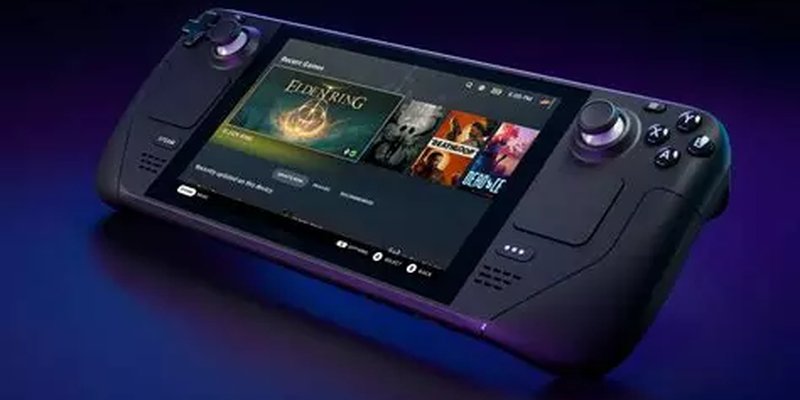
On paper, the Steam Deck OLED is not terrifying the spec sheet goblins. Valve’s refreshed model focuses on a 7.4-inch HDR OLED screen, 90Hz refresh, a 50Wh battery, Wi-Fi 6E, improved thermals, better inputs, and faster resume. Valve says the OLED revision gets 30-50% more battery life than the LCD model, which sounds less glamorous than a new APU until you remember this is a portable device and batteries are not optional decoration.
The Deck’s APU is aging. It will not brute-force every 2026 AAA release at pretty settings. It will not make 1080p ultra gaming happen through force of Linux enthusiasm. Some modern games ask for more CPU, more GPU, more memory, or kernel-level anti-cheat compatibility that SteamOS cannot magically bless into existence.
And yet the Deck still feels unusually complete because Valve optimized around how people actually use handhelds. You pick it up. You wake it. You launch something. You adjust performance with controls made for a controller, not a desktop control panel wearing a fake mustache. You suspend the game when life interrupts. You come back later. It mostly behaves.
That “mostly” is doing a lot of work, because this is still PC gaming. Proton compatibility can be messy. Shader caches happen. Some launchers remain tiny cursed kingdoms of login prompts. But the Steam Deck hides enough of the plumbing that the player spends more time playing and less time negotiating with the operating system.
That is not a small achievement. That is the product.
Windows Is Powerful, but It Still Does Not Want to Be Held
Windows handhelds have one massive advantage: compatibility. If a game wants Windows, a proprietary launcher, a particular anti-cheat, or Game Pass installation, the path is often easier on an Ally X or Legion Go than on SteamOS. For certain players, that is decisive. If your rotation is Call of Duty, Destiny 2, Fortnite, Game Pass drops, and random Epic freebies, Windows is not a flaw. It is the access card.
The problem is that Windows remains a desktop OS reluctantly squeezed into a controller shell. It can be managed. It can be improved with overlays, vendor launchers, controller shortcuts, and patience. But the seams show at the exact moments a handheld needs to feel invisible: updates, sleep behavior, pop-ups, driver panels, tiny UI elements, storefront conflicts, background tasks, and battery-draining nonsense that thinks your seven-inch screen is a conference-room monitor.
ASUS, Lenovo, and others deserve credit for building better front ends. Armoury Crate SE and Legion Space are not nothing. They centralize power profiles, library views, controls, and updates. They are necessary scaffolding. But scaffolding is not the same thing as architecture.
SteamOS feels like the house was designed around a controller. Windows handheld software often feels like someone built a very nice porch onto an office tower.
Battery Life Is Not a Side Quest
PC handheld marketing loves performance modes because performance modes are easy to screenshot. Turbo. Extreme. Beast. Nuclear Toaster. Whatever we are calling it this quarter.
But portable gaming lives in the battery graph. A handheld that only feels impressive while plugged in is not a handheld; it is a laptop doing a plank. The ROG Ally X understood this better than most, which is why its 80Wh battery matters more than another small benchmark lead. Lenovo’s Legion Go S lists a 55.5Wh battery, while Valve’s Steam Deck OLED sits at 50Wh but leans hard on system-level efficiency and a lower-resolution target.
This is where the Deck’s “weaker” hardware becomes strategic. A 1280x800 target on a seven-ish-inch screen is not shameful; it is sane. It gives the GPU fewer pixels to bully. It lets older and indie games sip power. It makes 40fps and 45fps caps feel useful instead of like emergency rations. It acknowledges that the best handheld setting is not always the highest setting. Sometimes the best setting is the one that lets you finish the dungeon before the battery icon starts filing a complaint.
Too many rivals chase laptop logic: higher resolution, higher refresh, higher wattage, bigger cooling. That can be wonderful when tuned well, especially for players who want one portable PC for everything. But handheld design is a compromise engine. If you spend the whole budget on peak output, you may not have enough left for silence, comfort, battery, weight, and software polish.
Ergonomics Are a Feature, Not a Footnote
There is another boring truth the Steam Deck got right: hands matter.
A handheld can have a gorgeous panel and heroic silicon, but if it turns your wrists into abandoned pretzels after forty minutes, it is not better. Valve’s device is large, yes, but its grips, trackpads, button spacing, and weight distribution were designed around long sessions. The OLED model even trims weight and refines haptics and controls rather than pretending comfort is something reviewers invented to avoid talking about teraflops.
Rivals have improved here. The Ally X’s redesigned grips are meaningful. Lenovo’s devices offer ambitious screen space and control ideas. But every manufacturer needs to treat ergonomics as core engineering, not cosmetic shell design. Heat under your fingers, rear button placement, analog stick angle, shoulder reach, fan tone, grip texture, and whether the device can be held in bed without becoming a forearm workout all matter.
This is not a desktop GPU review. The benchmark includes your hands.
The Real Steam Deck Killer Might Be SteamOS on Better Hardware
The most interesting challenge to Valve may not be Windows handhelds getting faster. It may be SteamOS spreading.
Lenovo’s SteamOS-focused Legion Go S pitch matters because it separates Valve’s best idea from Valve’s own chassis. If manufacturers can pair stronger hardware, good screens, better batteries, and genuinely comfortable designs with SteamOS-level simplicity, the category gets healthier fast. That is not a Deck killer in the console-war sense. It is better: an ecosystem graduating from one reference device into a real hardware class.
For players, that would mean actual choice. Want a cheaper SteamOS machine? Great. Want a bigger screen? Fine. Want Windows because your games demand it? Also fine. Want a compact Deck successor with better efficiency? Please, Valve, my wallet is braced and terrified.
The key is that the software experience must stop being an afterthought. A handheld should boot into a player-first interface. It should sleep reliably. It should expose power tuning without requiring a sysadmin temperament. It should make controller mapping easy. It should update without turning your quick session into a maintenance window. It should respect the battery like the battery is the entire point, because it is.
So What Should You Buy?
If you mostly play Steam games, indie titles, emulated classics, older AAA releases, and verified-or-playable PC games, the Steam Deck OLED is still the safest recommendation. It is not the fastest. It is the most coherent. That matters every single day you use it.
If you need Windows compatibility, Game Pass installs, certain anti-cheat-heavy multiplayer games, stronger peak performance, and better plugged-in flexibility, the ROG Ally X is one of the strongest alternatives. Its larger battery and revised hardware solve real problems. Just know that you are buying a portable Windows PC, with all the power and friction that phrase smuggles in like contraband.
If you want a larger display, stranger form factor, or you are watching SteamOS expansion closely, the Lenovo Legion Go family is worth monitoring. The SteamOS angle is the part that could age best, provided the hardware lands with the comfort, battery life, and polish players deserve.
If you are tempted by the MSI Claw or other Intel-based handhelds, look hard at current game compatibility, battery behavior, driver maturity, and pricing before jumping. New hardware platforms can be exciting, but early adoption is where wallets go to beta test.
The Verdict
The Steam Deck taught the industry that players wanted handheld PCs. Too many companies heard only the “PC” part.
The actual lesson is sharper: players want portable gaming machines that feel designed, not assembled from a parts catalog and a launcher overlay. They want enough performance, yes, but also a sane interface, dependable sleep, good controls, reasonable battery life, quiet operation, readable settings, and a device that does not make every short play session feel like logging into work.
Specs sell the first week. Cohesion wins the year.
That is why the Steam Deck remains the benchmark even when it loses the benchmark. And until more handheld makers internalize that, the Deck’s biggest advantage will not be Valve’s chip, screen, or price. It will be the simple fact that it understands what it is.