Leverless fighting controllers are having the exact kind of mainstream moment that makes an old niche suddenly look obvious in hindsight.
For years, the all-button box was treated like fighting game witchcraft: part keyboard, part arcade panel, part "wait, is that even legal?" tournament argument. Now it is being sold as polished consumer hardware, discussed in buyer guides, and placed next to pads and arcade sticks as a normal option for people who play Street Fighter 6, Tekken 8, Guilty Gear Strive, Fatal Fury, and whatever else is currently teaching your thumbs humility.
The recent attention around the Victrix Pro KO captures the shift neatly. IGN describes it as a packed, premium leverless controller that comes in below some of Victrix's pricier fight stick hardware, while TheGamer's review frames it as a comfortable, approachable way to learn new fighting games on leverless. Turtle Beach, which owns Victrix, has been even more direct: leverless is not just a novelty. It is a precision-focused alternative that is increasingly visible among competitive players.
That sounds like marketing copy until you understand what actually changed. Leverless controllers did not suddenly invent better players. They simply removed a physical lever from the equation. And in fighting games, where one wrong direction can turn a clean punish into a sad little crouch, removing mechanical ambiguity matters.
So what is a leverless controller, actually?
Think of a traditional arcade stick as a tiny gate you move through with your wrist. You push left, right, down, up, or one of the diagonals, and the stick physically travels to that direction. That feels fantastic. It is tactile, nostalgic, and deeply tied to arcade culture.
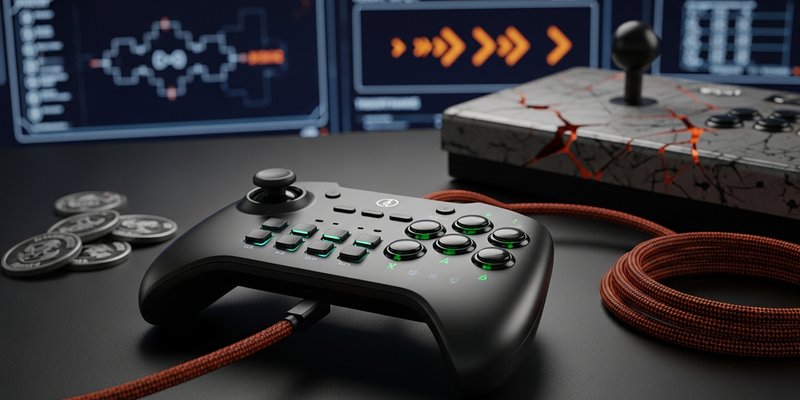
A leverless controller takes that movement hand and says: what if every direction was a button?
- Left is a button.
- Down is a button.
- Right is a button.
- Up is usually a larger thumb button, often placed below the others.
The attack side still looks familiar: punches, kicks, slash buttons, macros depending on the game and ruleset. But movement is now digital and finger-based. In plain English: it is closer to typing than steering.
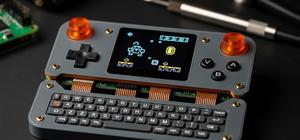
That is why the comparison to the Steam Deck moment fits. Valve did not invent handheld PC gaming, but it made the category feel coherent for regular humans. Leverless controllers have existed for ages, but newer boards are doing the same kind of translation work. They are taking a specialist object and turning it into something a curious player can actually imagine buying.
The appeal is speed, but the real prize is consistency
The obvious pitch is speed. No lever travel means directional changes can happen extremely quickly. If you are moving from back to forward for a dash, or cleaning up a charge input, your fingers can be faster than a wrist moving a stick through physical space.
But speed is only half the story. The bigger benefit is consistency.
Fighting games are built on repeated tiny decisions. Walk into range. Block low. Anti-air. Cancel into super. Whiff punish. Do this a thousand times under pressure while another human tries to turn you into a training dummy. A controller that makes your inputs cleaner will not make those decisions for you, but it can reduce the number of times your hardware adds noise to the conversation.
That is why leverless has become especially attractive in modern games with demanding movement and cancel systems. In Street Fighter 6, drive rush pressure, perfect parries, charge characters, and fast directional inputs all reward reliability. In Tekken 8, movement discipline and rapid directional control matter constantly, even if Tekken's relationship with leverless layouts is its own spicy family dinner.
To decode the hype: leverless is not an auto-win button. It is a cleaner instrument. A better guitar still requires you to know the song. Otherwise you are just missing notes on more expensive equipment, which is a very gamer-coded financial strategy.
The learning curve is real, and it will humble you
Here is the part every product page should put in 48-point font: switching to leverless feels weird at first.
If you grew up on pads or arcade sticks, your brain has decades of "up means push upward" baked into the wiring. On many leverless layouts, up lives under your thumb. Jumping forward becomes a small chord. Quarter-circles become a roll across buttons. Dragon punches become choreography. Even basic walking can feel like trying to operate a submarine with piano keys.
That discomfort is not proof the controller is bad. It is proof your muscle memory is being rewritten.
The sane path looks boring, which is how you know it works:
- Spend time in training mode before touching ranked.
- Practice walking, crouching, blocking, and jumping before specials.
- Run simple quarter-circle and charge inputs until they stop feeling cursed.
- Only then rebuild your bread-and-butter combos.
- Expect weeks, not minutes, before it feels natural.
The trap is buying a premium box and expecting your rank to immediately climb because your controller now looks like it came from a cyberpunk accounting firm. The first few sessions may be worse. That is normal. You are not just changing hardware; you are changing the way your hands think.
Are leverless controllers fair?
This is where the fighting game community gets loud, because of course it does. We are talking about a scene that can spend three hours debating one frame of advantage like it is international law.
The fairness debate mostly revolves around SOCD, short for simultaneous opposing cardinal directions. Translation: what happens when the controller receives opposite directions at the same time, like left plus right or up plus down?
On a traditional stick, you physically cannot hold left and right simultaneously in the same way. On an all-button device, you can press both. That means controllers need firmware rules to "clean" those inputs into a legal result. Some games and tournament circuits have specific expectations for how this should work, and Capcom's handling of Street Fighter 6 rules made SOCD a mainstream FGC topic rather than a backroom tech goblin issue.
Evo's controller rules also acknowledge SOCD cleaning as part of the competitive hardware landscape. The short version: leverless is not banned by default, but it has to behave within the rules. The scene has largely moved toward regulation rather than panic, which is the right call. Hardware evolves. Rules should evolve with it.
That matters because the best argument for leverless is not "let players exploit weird input physics." It is "give players a precise, ergonomic, rule-compliant way to compete." Big difference.
The accessibility angle deserves more attention
There is another reason leverless is catching on, and it is not just esports optimization. For some players, a joystick is uncomfortable. Wrist movement can be tiring. Long sessions on a heavy stick can aggravate strain. A compact all-button layout can be easier to position, easier to transport, and friendlier to certain hands.
That does not mean leverless is universally more accessible. Some players will find the button chords harder. Some will prefer pads. Some will never give up the glorious clack of a Sanwa lever, and honestly, respect. But more viable controller types means more people can find the version of fighting games that fits their body.
That is healthy for the genre. Fighting games already ask newcomers to climb a wall made of timing windows, matchup knowledge, frame data, and emotional damage. If hardware variety gives more players a comfortable grip on that wall, good.
Should you buy one?
Maybe. That is the honest answer.
If you are new to fighting games, do not assume leverless is mandatory. A normal controller is fine. Many great players use pads. Many use arcade sticks. The best controller is still the one that lets you practice consistently without fighting your own hands.
But if you are already invested in fighting games and curious about cleaner inputs, leverless is absolutely worth trying. The category now has more options than ever, from premium boards like the Victrix Pro KO to cheaper enthusiast favorites that make the experiment less financially dramatic. Try before you buy if possible. Borrow one at a local. Ask around in your scene. Fighting game players love explaining their controllers; it is basically our version of showing baby photos.
For competitive players, the pitch is stronger. Leverless can make certain motions faster and more repeatable. For charge characters, rapid directional changes, and training-mode lab monsters, that precision can matter. Just remember that tournament legality and SOCD behavior are part of the purchase, not fine print. If your controller cannot be configured to match current rules, that shiny slab becomes an expensive desk ornament.
The bottom line
Leverless controllers are not replacing arcade sticks. They are not killing pads. They are not a cheat code. The better read is simpler: fighting game hardware is growing up.
The old arcade stick still has history, feel, and style. The pad still has convenience and familiarity. Leverless brings precision, portability, and a learning curve that feels awful until it suddenly clicks. That mix is why the category is breaking out of specialist circles and into mainstream fighting game conversation.
Like the Steam Deck did for handheld PC gaming, leverless controllers are making a formerly niche setup feel legible. Not effortless. Not cheap. Not magic. Just legible.
And in a genre where the difference between genius and disaster is sometimes one missed diagonal, legible is a pretty big deal.